study
WordReference French: The Complete Guide to French Translation, Vocabulary, and Language Learning

Published
3 months agoon

Table of Contents
ToggleLearning French can be an exciting and rewarding experience, but understanding the language often requires more than simply translating one word into another. French vocabulary can change depending on context, grammar, gender, pronunciation, regional usage, and the relationship between words in a sentence. This is why many students, travelers, teachers, translators, and language learners use WordReference French as a valuable language resource. WordReference is widely known for its French-English dictionary, translation tools, example sentences, grammar information, conjugation resources, and discussion forums where users can explore difficult words and expressions in greater detail. Whether you are trying to understand a French phrase, check the meaning of a new vocabulary word, find the correct translation for an expression, or learn how native speakers use a term in real situations, WordReference French can be a useful part of your language-learning routine.
One of the biggest advantages of using WordReference for French is that it can provide more context than a simple automatic translation tool. A single French word may have several possible English meanings, and the correct translation often depends on the sentence in which the word appears. For example, a word may be used differently as a noun, verb, adjective, or expression, while some French words can have formal, informal, regional, technical, or conversational meanings. WordReference helps users explore these differences and understand how vocabulary works in real language. In this complete guide, we will explain what WordReference French is, how to use it effectively, why context matters when translating French, how the forums can help with difficult questions, and how students can use this resource to improve their vocabulary, grammar, reading, and overall French language skills.
What Is WordReference French?
WordReference French is a language-learning and translation resource designed to help users understand French vocabulary, expressions, definitions, translations, grammar, and usage. One of its most popular features is the French-English dictionary, which allows users to search for French words and discover their possible English meanings. However, the value of the resource goes beyond simple word translation. When you search for a French word, you may find different meanings, grammatical information, example phrases, pronunciation details, related terms, synonyms, and notes about how the word is used in different contexts. This makes WordReference particularly useful for learners who want to understand not only what a word means but also how it behaves in a real sentence.
For many French learners, the most important lesson is that translation is rarely a simple one-word process. A French word may have several possible English equivalents, and an English word may require different French translations depending on the situation. WordReference helps users investigate these differences instead of automatically choosing the first result they see. This is especially important for idioms and expressions, because translating each individual word separately may produce a sentence that is technically understandable but unnatural or completely incorrect. By checking the dictionary entries, examples, and discussions, learners can develop a better understanding of how French is actually used.
Why WordReference French Is Useful for Language Learners
There are many reasons why WordReference French has become a popular resource for people studying the French language. First, it can help learners quickly check the meaning of unfamiliar vocabulary while reading a book, article, website, email, or conversation. Instead of stopping their study session for a long time, users can search for a word and examine its meanings and examples. This makes it easier to continue reading while gradually building a larger vocabulary. Over time, regularly checking new words can help learners recognize common patterns and understand how French vocabulary is connected.
Another major advantage is the amount of contextual information available for many words. A beginner may see one English translation and assume that it can be used in every situation, but languages do not work that way. Some words are appropriate in formal writing, while others are more common in casual conversation. Some expressions are used mainly in certain countries or regions, and some words have different meanings depending on whether they are used in a professional, academic, literary, or everyday context. WordReference can help users notice these differences and make more informed choices when speaking or writing French.
WordReference is also useful because it can support different levels of learners. Beginners may use it to search for basic vocabulary such as everyday objects, common verbs, food, family members, and simple phrases. Intermediate students may use it to investigate idiomatic expressions, confusing synonyms, verb usage, and more complex vocabulary. Advanced learners and translators may use the dictionary and forums to research subtle differences in meaning, specialized terminology, regional expressions, and difficult translation problems. This flexibility makes it useful throughout the different stages of learning French.
How to Use the WordReference French Dictionary
Using WordReference French effectively begins with searching for the exact word or phrase you want to understand. If you encounter an unfamiliar French word while reading, enter it into the search field and examine the available results carefully. Do not always choose the first translation automatically. Instead, look at the different meanings and check whether the word is being used as a noun, verb, adjective, adverb, or another part of speech. Paying attention to grammar can make a significant difference because the same spelling may have different meanings or functions.
It is also important to examine example sentences whenever they are available. Examples can show you how a word is used naturally and can help you understand its relationship with other words in the sentence. For example, a dictionary definition may tell you the basic meaning of a verb, but an example may reveal which preposition normally follows it or whether the expression is formal or informal. These details are often essential for producing natural French. By studying vocabulary together with examples, learners can remember words more effectively and avoid using direct translations that sound unnatural to native speakers.
When searching for a phrase, it is often better to search for the complete expression rather than translating each word separately. French contains many idiomatic expressions whose meanings cannot be understood by combining the literal meanings of the individual words. A complete phrase search may reveal the correct equivalent, an explanation, or a discussion about how the expression is used. This approach is especially helpful when dealing with conversational French, proverbs, slang, and fixed expressions.
Understanding French Words in Context
Context is one of the most important parts of successful French translation. A dictionary can provide several possible meanings for a word, but the sentence itself determines which meaning is correct. For example, a word may have one meaning when used in a business context and another meaning in everyday conversation. A verb may also change its meaning depending on the preposition that follows it. This is why simply memorizing a list of direct translations is not always enough to become a strong French speaker.
WordReference French can help learners compare meanings and examine how words are used in different situations. When you find a new word, try to read the surrounding sentence and ask yourself what role the word plays. Is it describing an object, an action, an emotion, a person, or an abstract idea? Is the sentence formal or informal? Is the word part of a fixed phrase? These questions can help you choose a more accurate translation and gradually improve your ability to understand French without translating every word into English.
Learning vocabulary in context also improves long-term memory. Instead of remembering that one French word equals one English word, you begin to remember complete phrases and patterns. This is a more natural way to learn a language because native speakers do not normally construct every sentence by translating individual words. They recognize common combinations and expressions automatically. Using WordReference to explore examples can help learners develop this kind of natural language awareness.
WordReference French and French Grammar
Although WordReference is often used as a dictionary, it can also be helpful when studying French grammar. Many learners use it to check verb forms, gender, plural forms, parts of speech, and other grammatical information. French grammar can be challenging because nouns have grammatical gender, verbs change according to the subject and tense, and sentence structures can differ significantly from English. When you encounter a word that you do not understand grammatically, checking its dictionary entry can provide useful information.
Verb conjugation is another important area where a French dictionary can support language learning. French verbs may appear in many different forms, and beginners often have difficulty recognizing an unfamiliar conjugation. Understanding the infinitive form can help learners connect the form they see in a sentence with the base verb. This makes it easier to study vocabulary and grammar at the same time. Instead of memorizing a verb without understanding how it changes, students can observe its different forms and learn how it functions in real sentences.
Grammar should always be studied together with examples. A rule may explain why a particular form is correct, but examples show how the rule appears in real communication. When using WordReference French, learners can combine dictionary information with their own grammar studies to create a more complete understanding of the language. This is especially useful when a translation seems confusing or when a French sentence does not follow the structure that an English speaker expects.
Using WordReference Forums for Difficult French Questions
One of the most valuable features of WordReference is its discussion forums. Sometimes a dictionary entry does not completely answer a learner’s question, especially when the problem involves an unusual expression, a cultural reference, a regional phrase, slang, or a complicated translation. In these situations, forum discussions can provide additional explanations and examples from people with experience in the language.
The forums can be particularly useful for questions about phrases that seem difficult to translate directly. A learner may find an expression in a French movie, book, song, social media post, or conversation and wonder what it really means. By searching the forums, the learner may find that someone else has already asked a similar question. Discussions can explain the literal meaning, the intended meaning, the tone, and the situations in which the expression is appropriate. This can provide a much deeper understanding than a basic dictionary definition.
However, learners should still evaluate information carefully. Online discussions may contain different opinions, and language can vary between regions and communities. When several contributors explain the same usage or provide examples from native speakers, the information may be especially helpful, but it is still important to consider context. The best approach is to compare the dictionary information, examples, and forum explanations before deciding how to use a difficult expression.
WordReference French for Beginners
Beginners can use WordReference French as a daily vocabulary companion. When starting French, it is natural to encounter many unfamiliar words, and searching for them can make reading and studying less frustrating. Beginners can use the resource to check basic meanings, discover pronunciation information, identify grammatical gender, and learn common phrases. Instead of trying to memorize thousands of words at once, students can focus on vocabulary that appears in their current lessons, reading materials, conversations, and daily life.
One useful strategy is to keep a personal vocabulary list. When you search for a new word, write down the word, its meaning, an example sentence, and any important grammar information. For nouns, you may want to remember the article together with the noun because grammatical gender is an important part of French. For verbs, it can be helpful to record a common example or phrase rather than memorizing only the English translation. This approach makes vocabulary study more practical and helps learners remember how words are actually used.
Beginners should also avoid relying on translation for every single word. The goal of using a dictionary is to improve understanding, not to prevent independent thinking. Try to guess the meaning of a word from context first, then use WordReference to confirm or correct your guess. This method helps develop reading skills and gradually reduces dependence on translation.
WordReference French for Intermediate and Advanced Learners
Intermediate and advanced French learners can use WordReference in more sophisticated ways. At this level, students often understand the basic meaning of common words but struggle with subtle differences between synonyms, natural expressions, register, and regional usage. A dictionary and forum resource can help learners investigate these more advanced questions.
For example, two French words may both appear to translate into the same English word, but native speakers may use them in different situations. One may be more formal, another more conversational, and another may be preferred in a particular region. Advanced learners can use examples and discussions to explore these distinctions. This can make their writing more precise and their speaking more natural.
Advanced users can also use WordReference to improve translation quality. Instead of accepting the first possible translation, they can compare several alternatives and examine which one best matches the tone and meaning of the original sentence. This is particularly useful for students working with academic texts, professional communication, literature, journalism, or specialized subjects. The more experience a learner gains, the more valuable detailed context becomes.
WordReference French Compared with Automatic Translation Tools
Automatic translation tools can be extremely convenient, especially when users need to understand the general meaning of a long sentence or document quickly. However, automatic translation and dictionary research serve different purposes. A translation tool may provide a complete sentence in seconds, while WordReference can help users investigate the meaning and usage of individual words and expressions in greater detail.
For language learning, understanding the structure behind a translation is often just as important as receiving the translation itself. If a learner simply copies an automatically generated sentence, they may not understand why certain words were chosen or whether the sentence sounds natural in a specific situation. A dictionary can encourage deeper learning by showing definitions, grammatical information, examples, and related discussions.
The best approach is often to use different resources for different purposes. An automatic translator may help you understand the general meaning of a long passage, while WordReference can help you investigate an important word, phrase, or grammar question. Combining tools thoughtfully can improve both speed and accuracy, especially when learning French.
Common Mistakes When Using WordReference French
One common mistake is choosing the first translation without reading the complete entry. Dictionary results can contain multiple meanings, and the first option is not necessarily correct for the sentence you are studying. Always consider the context and compare the available meanings before selecting a translation.
Another mistake is translating idioms word by word. French expressions often have meanings that cannot be understood literally. If a phrase seems strange when translated directly, search for the complete expression and look for examples or discussions. This can help you discover whether the phrase has an equivalent expression in English or whether it requires a longer explanation.
Learners should also avoid using a word without checking its grammatical category. A noun, adjective, and verb may have similar forms but completely different functions. Checking grammar information and examples can prevent many common errors. Finally, do not assume that every expression is appropriate in every situation. Formal writing, casual conversation, regional speech, and professional communication may require different vocabulary choices.
How to Get the Most Out of WordReference French
To use WordReference French effectively, make it part of an active learning process rather than treating it as a simple translation machine. When you encounter a new word, first try to understand it from context. Then search for the word, compare its meanings, study at least one example, and pay attention to grammar and usage notes. If the phrase is unusual or confusing, explore the discussion forums to see how other learners and experienced speakers have explained it.
It can also be useful to record vocabulary in complete phrases. Instead of writing only a French word and its English meaning, write a short sentence that demonstrates how the word is used. This helps you remember the word in a meaningful context and makes it easier to use later. Reviewing vocabulary regularly is also important because repeated exposure helps move words from short-term memory into long-term knowledge.
The most successful learners combine dictionary research with listening, reading, writing, and speaking practice. WordReference can answer questions and clarify difficult language, but real progress comes from using French regularly. Read articles, listen to French audio, watch French content, write sentences, and practice conversations. Use the dictionary whenever you need help, but gradually challenge yourself to understand more French directly.
Conclusion
WordReference French is a valuable resource for anyone who wants to understand French vocabulary, expressions, grammar, translation, and real-world usage more effectively. Its strength comes from providing more than simple word-for-word translations. By examining different meanings, examples, grammatical information, and community discussions, learners can develop a deeper understanding of how French works in real communication. Whether you are a beginner learning basic vocabulary, an intermediate student studying expressions and grammar, or an advanced learner working with complex translations, WordReference can support your language-learning journey.
The key to using WordReference successfully is to focus on context. Do not simply search for a word and choose the first translation you see. Read the sentence, consider the situation, examine the examples, and investigate the expression when necessary. Use the resource as a tool for learning rather than only as a way to quickly replace French words with English words. When combined with regular reading, listening, writing, and speaking practice, WordReference French can become an important part of a consistent and effective French study routine.
Frequently Asked Questions About WordReference French
What is WordReference French used for?
WordReference French is used to look up French words, phrases, translations, definitions, grammatical information, examples, and language usage. It is useful for students, travelers, translators, teachers, and anyone who wants to understand French more accurately.
Is WordReference French good for learning French?
Yes, WordReference can be very useful for learning French because it provides more than basic translations. Learners can study vocabulary, examples, grammar information, expressions, and discussions about difficult language questions. However, it works best when combined with regular reading, listening, writing, and speaking practice.
Can I use WordReference to translate French phrases?
Yes. Searching for a complete French phrase can be especially useful when the phrase is an idiom or fixed expression. Translating individual words separately may not reveal the true meaning of the complete phrase.
Is WordReference better than an automatic translator?
The answer depends on your goal. Automatic translators can be useful for quickly understanding longer texts, while WordReference is especially valuable for studying individual words, expressions, meanings, grammar, and usage. Many learners benefit from using both tools for different purposes.
Can WordReference help with French grammar?
Yes. WordReference can provide useful grammatical information, including parts of speech, verb forms, gender information, and examples. It can be particularly helpful when you are unsure how a word functions in a sentence.
Can beginners use WordReference French?
Absolutely. Beginners can use WordReference to learn basic vocabulary, check meanings, understand grammatical gender, study common phrases, and build a personal vocabulary list. New learners should try to understand words from context before checking the dictionary whenever possible.
What should I do if I cannot find the meaning of a French expression?
Try searching for the complete expression instead of searching for each word separately. You can also explore discussion forums for explanations and examples. Difficult idioms and regional expressions often require context to understand correctly.
How can I improve my French vocabulary with WordReference?
A good method is to search for unfamiliar words while reading or listening to French, study the relevant meanings and examples, and record useful words in complete sentences. Reviewing these words regularly and using them in your own writing or conversation can help improve long-term retention.
Does WordReference French explain regional differences?
In many cases, dictionary entries and discussions can help users understand regional variations and differences in usage. When a word or expression is associated with a particular region or style of speech, context and community discussions can provide additional insight.
Is WordReference useful for French translation?
Yes. WordReference can be very useful for French translation, particularly when you need to understand the exact meaning, tone, grammar, or usage of a word or expression. For complex professional or official translations, additional proofreading and specialized resources may still be necessary.
You may like
study
Answer Key: Meaning, Purpose, Types, and How to Use It Effectively
Published
3 months agoon
July 30, 2026
Table of Contents
ToggleAn answer key is one of the most useful tools in education because it provides the correct answers to questions included in worksheets, assignments, quizzes, tests, examinations, practice papers, and learning activities. Students often use an answer key to check their work, identify mistakes, understand difficult concepts, and measure their progress. Teachers use answer keys to grade assessments more efficiently, maintain consistency, save time, and ensure that students are evaluated according to the same standards. Although an answer key may appear to be a simple list of correct responses, a well-designed answer key can play an important role in improving learning, supporting fair assessment, and providing meaningful feedback.
The value of an answer key depends greatly on how it is used. When students check their answers carefully and study the reasons behind their mistakes, the answer key becomes a learning resource rather than only a scoring tool. However, when learners copy answers without attempting the questions themselves, they may miss important opportunities to develop critical thinking and problem-solving skills. This complete guide explains the meaning, purpose, types, benefits, limitations, and best practices associated with answer keys. It also discusses how students and teachers can use answer keys in a productive and responsible way.
What Is an Answer Key?
An answer key is an official guide that contains the correct answers or expected responses for a set of questions. It is commonly prepared for educational materials such as homework assignments, worksheets, multiple-choice tests, practice examinations, textbooks, online quizzes, and classroom activities. Depending on the subject and type of assessment, an answer key may contain simple answers, detailed explanations, mathematical solutions, sample responses, grading instructions, or scoring criteria.
For example, a mathematics answer key may show the correct numerical answer and the complete steps used to solve the problem. A science answer key may include the correct response along with a short explanation of the scientific principle involved. In language learning, the answer key may provide correct grammar, vocabulary, spelling, or sentence structure. For essay questions, the answer key may not contain one exact answer because different students can provide different valid responses. Instead, it may include important points, expected ideas, examples, or a scoring rubric that helps teachers evaluate the quality of each response.
An answer key is therefore more than a collection of answers. It is a reference document designed to support accurate checking, consistent grading, and effective learning. The quality of the answer key can influence the quality of feedback that students receive and the reliability of the assessment process.
Why Is an Answer Key Important?
The importance of an answer key comes from its ability to provide a clear standard for evaluating responses. In a classroom, students may complete the same worksheet or examination, but their answers must be checked according to consistent expectations. An answer key helps teachers compare student responses with the intended solutions and reduce unnecessary differences in grading. This can make the assessment process more organized, efficient, and fair.
For students, an answer key provides an opportunity for self-assessment. After completing an exercise, students can compare their responses with the correct answers and determine which topics they understand well. They can also identify areas that require more practice. This process encourages independent learning because students do not always need to wait for a teacher to explain every mistake. When used properly, an answer key can help learners take responsibility for their academic progress.
Answer keys are also useful in large educational settings where teachers may need to check hundreds of papers. A clear and accurate key can reduce grading time and help teachers focus more attention on providing detailed feedback. In digital education, answer keys may be connected to automated assessment systems that provide immediate results. This allows students to receive feedback quickly and continue learning without long delays.
Benefits of Using an Answer Key for Students
Students can gain several educational benefits from using an answer key correctly. One of the greatest advantages is immediate feedback. Instead of waiting for a teacher to check an assignment, students can review their work and identify incorrect responses. Immediate feedback can make learning more effective because the student can connect the mistake with the original question while the topic is still fresh.
An answer key also supports independent learning. Students can complete practice exercises, check their responses, and review weak areas without depending entirely on a teacher. This is especially helpful when preparing for examinations because learners can practice repeatedly and measure improvement over time. A student who keeps making mistakes in one topic can use the answer key to recognize the problem and return to the relevant lesson.
Another benefit is improved confidence. When students compare their work with an accurate answer key and discover that they understand the material, they may feel more prepared for future assessments. At the same time, incorrect answers can show learners where additional effort is needed. The goal is not simply to achieve a high score but to understand the reasons behind both correct and incorrect responses.
Benefits of an Answer Key for Teachers
Teachers use answer keys to make grading more accurate, consistent, and efficient. Without a clear answer key, a teacher may need to reconsider the expected response for each question while checking many papers. This can increase grading time and create the possibility of inconsistent evaluation. A well-prepared answer key provides a reliable reference and helps ensure that similar responses receive similar scores.
Answer keys also support collaboration among teachers. When several instructors teach the same subject or grade the same examination, a shared answer key can help them apply the same standards. This is particularly important in standardized assessments and large educational institutions. A detailed key can also clarify how partial marks should be awarded when students show correct reasoning but make minor errors.
Teachers can use information from answer-key-based assessments to improve instruction. If many students choose the same incorrect response, the teacher may discover that a topic was misunderstood or that the lesson requires a different explanation. In this way, answer keys can support not only grading but also curriculum planning and teaching improvement.
How Students Should Use an Answer Key Effectively
Students should first attempt all questions without looking at the answer key. This allows them to test their current understanding and develop independent thinking. Looking at the answers before making an honest attempt may create the illusion of learning because recognizing a correct answer is often easier than producing it independently.
After completing the exercise, students should compare each response with the answer key. They should not only mark answers as right or wrong. They should ask questions such as: Why is my answer incorrect? Which concept did I misunderstand? Did I read the question carefully? Did I make a calculation error? Is there a better method for solving the problem? These questions turn the answer-checking process into a deeper learning activity.
Students should also keep a record of repeated mistakes. For example, a learner may notice frequent errors in fractions, grammar rules, scientific vocabulary, or reading comprehension. By organizing mistakes by topic, students can create a focused study plan. This approach is more useful than repeatedly completing random exercises without understanding the underlying problems.
Common Mistakes When Using an Answer Key
One common mistake is copying the answer without understanding it. This may help a student complete an assignment quickly, but it does not necessarily improve knowledge. The student may later struggle when asked to solve a similar problem without access to the answer key.
Another mistake is focusing only on the final score. A score can provide a general measure of performance, but it does not explain the reason for each error. Students should examine patterns in their mistakes and identify the concepts that need further study. A learner who receives 80 percent may still have important weaknesses, while a learner who receives 60 percent may understand many difficult concepts but need help with a specific topic.
Some students also assume that every answer key is perfect. In reality, answer keys can contain mistakes, unclear wording, outdated information, or incomplete explanations. If an answer appears incorrect, students should review reliable learning materials and discuss the issue with a teacher. An answer key should be treated as an important reference, but critical thinking should still be used.
How Teachers Can Create a High-Quality Answer Key
A good answer key should be accurate, clear, complete, and easy to use. Teachers should review every question and verify that the expected answer is correct. If a question allows more than one valid response, the answer key should include acceptable alternatives. This prevents students from losing marks simply because they used different but correct wording.
The key should also explain how marks are awarded. For questions involving multiple steps, teachers may specify the points assigned to each stage. For example, a mathematics problem may award marks for selecting the correct formula, substituting values correctly, performing calculations, and writing the final answer. This approach supports fair grading and recognizes partial understanding.
Teachers should test the answer key before using it in a major assessment. Another teacher or subject expert may review the questions and solutions to identify errors or unclear instructions. This process can improve reliability and reduce problems during grading.
Answer Key Examples
Consider the following simple mathematics question:
Question: What is 15 + 27?
A basic answer key may state:
Answer: 42
A detailed answer key may provide:
15 + 27 = 42. Add the ones: 5 + 7 = 12. Write 2 and carry 1. Add the tens: 1 + 2 + 1 = 4. Therefore, the answer is 42.
The detailed version is more useful for learning because it explains the process. A student who wrote an incorrect answer can identify whether the mistake occurred during addition or carrying.
For an English question:
Question: Choose the correct word: “She ___ to school every day.”**
The answer key may state:
Answer: goes
It may also explain that “goes” is used because the subject “she” is third-person singular in the simple present tense.
These examples show that explanations can make an answer key more valuable than a simple list of correct responses.
The Role of Answer Keys in Online Education
Online education has increased the use of digital answer keys and automated assessment systems. Students can complete quizzes from different locations and receive immediate results. This can support flexible learning and allow students to study at their own pace. Online answer keys may include explanations, links to additional lessons, and recommendations for further practice.
However, digital answer systems should be designed carefully. Some questions require creativity, reasoning, or detailed explanations that cannot always be evaluated accurately by automated tools. Human review may still be necessary for essays, projects, presentations, and complex problem-solving tasks. The best educational systems often combine automated feedback with teacher guidance.
Are Answer Keys Good or Bad for Learning?
An answer key is neither automatically good nor automatically harmful. Its effect depends on how it is used. When students attempt questions independently, compare their work, study mistakes, and review difficult concepts, the answer key can improve learning. When students copy answers without thinking, the same resource may reduce meaningful practice.
The most effective use of an answer key involves active learning. Students should explain the correct answer in their own words, solve the question again without looking, and practice similar problems. Teachers can encourage this process by providing explanations rather than only final answers.
Conclusion
An answer key is an important educational tool that supports learning, self-assessment, accurate grading, and consistent evaluation. It can help students identify mistakes, understand correct solutions, prepare for examinations, and take greater responsibility for their progress. For teachers, an answer key saves time, supports fair grading, and provides useful information about student understanding.
The greatest value of an answer key comes from thoughtful use. Students should not treat it as a shortcut for copying answers. Instead, they should use it to analyze mistakes, improve weak areas, and develop stronger problem-solving skills. Teachers should create answer keys that are accurate, detailed, and flexible enough to recognize valid alternative responses. When designed and used effectively, an answer key becomes more than a list of correct answers—it becomes a valuable guide for better learning and educational success.
Frequently Asked Questions
1. What is an answer key?
An answer key is a guide that provides the correct answers or expected responses for questions in a worksheet, quiz, test, examination, textbook, or learning activity. It may also include explanations, solutions, scoring instructions, or grading criteria.
2. Why is an answer key important?
An answer key is important because it helps students check their work and understand mistakes. It also helps teachers grade assessments consistently, save time, and maintain clear evaluation standards.
3. How should students use an answer key?
Students should first attempt the questions independently. After completing the work, they should compare their answers with the key, study incorrect responses, understand the reasons for mistakes, and practice similar questions.
4. Can an answer key contain more than one correct answer?
Yes. Some questions allow multiple correct responses. A well-designed answer key should include acceptable alternatives, especially for short-answer, discussion, and open-ended questions.
5. Is it wrong to use an answer key?
Using an answer key is not wrong when it is used for learning, practice, and self-assessment. It becomes unhelpful when a student copies answers without attempting to understand or solve the questions.
6. What is the difference between an answer key and a marking scheme?
An answer key usually provides correct answers, while a marking scheme explains how marks should be awarded. A marking scheme may include point values, partial-credit rules, and detailed evaluation criteria.
7. How can teachers make an answer key more effective?
Teachers can make an answer key more effective by checking its accuracy, including clear explanations, identifying acceptable alternative answers, providing partial-mark rules, and using rubrics for complex assignments.
8. Can an answer key improve exam preparation?
Yes. Students can use answer keys to check practice tests, identify weak topics, review mistakes, and measure progress. The key is to understand the solutions rather than memorize or copy them.
9. Are online answer keys reliable?
Online answer keys can be useful, but their accuracy depends on the source. Students should use trusted educational websites, official materials, textbooks, or teacher-provided resources and should verify answers that appear unclear or incorrect.
10. What should a good answer key include?
A good answer key should include accurate answers, clear explanations when necessary, acceptable alternative responses, detailed solutions for complex questions, and consistent scoring guidance.
study
Which of the Following Is an Arithmetic Sequence? (Brainly Guide): Complete Explanation with Examples
Published
3 months agoon
July 28, 2026
Table of Contents
ToggleMathematics is full of patterns, and one of the most common patterns students encounter is the arithmetic sequence. If you searched “Which of the following is an arithmetic sequence Brainly“, you are probably trying to solve a homework question or prepare for an exam. Understanding arithmetic sequences is easier than it seems once you know the simple rule that defines them. Instead of memorizing answers, learning the concept will help you solve nearly every arithmetic sequence question you encounter in school.
Arithmetic sequences appear in middle school, high school, college entrance exams, and standardized tests because they teach students how numbers change in a predictable way. These sequences also have practical applications in finance, engineering, computer science, and everyday problem-solving. Learning how to recognize an arithmetic sequence is therefore a valuable mathematical skill that extends beyond the classroom.
What Is an Arithmetic Sequence?
An arithmetic sequence is a sequence of numbers where the difference between consecutive terms remains constant. This constant difference is known as the common difference (d).
For example:
- 2, 5, 8, 11, 14
- 10, 15, 20, 25
- 50, 45, 40, 35
Each sequence changes by exactly the same amount every time.
How to Identify an Arithmetic Sequence
Follow these simple steps:
Step 1: Find the Difference
Subtract each term from the next term.
Example:
5, 8, 11, 14
- 8 − 5 = 3
- 11 − 8 = 3
- 14 − 11 = 3
Since every difference equals 3, this is an arithmetic sequence.
Example 2
4, 9, 14, 19
Differences:
- 9 − 4 = 5
- 14 − 9 = 5
- 19 − 14 = 5
Again, every difference is the same.
Therefore, this is an arithmetic sequence.
Example 3
2, 4, 8, 16
Differences:
- 2
- 4
- 8
The differences are not equal.
Therefore, this is NOT an arithmetic sequence.
Characteristics of Arithmetic Sequences
An arithmetic sequence always has:
- A constant difference
- Predictable pattern
- Linear growth or decrease
- Equal spacing between numbers
If the difference changes, the sequence is not arithmetic.
Formula for the nth Term
The nth term formula is:
an=a1+(n−1)da_n = a_1 + (n-1)dan=a1+(n−1)d
Where:
- a₁ = first term
- d = common difference
- n = term number
Example:
Sequence:
3, 7, 11, 15…
Find the 10th term.
- First term = 3
- Difference = 4
Calculation:
10th term
= 3 + (10−1)×4
= 3 + 36
= 39
Real-Life Examples
Arithmetic sequences appear in many everyday situations.
A person saves $20 every week.
Savings:
- Week 1 = $20
- Week 2 = $40
- Week 3 = $60
- Week 4 = $80
This forms an arithmetic sequence because the increase is always $20.
Another example is climbing stairs where each floor contains the same number of steps.
Common Mistakes Students Make
Many students confuse arithmetic sequences with geometric sequences.
Arithmetic:
5, 10, 15, 20
Difference = 5
Geometric:
5, 10, 20, 40
Ratio = 2
Always check whether you are adding or subtracting the same number rather than multiplying or dividing.
Practice Questions
Question 1
Which sequence is arithmetic?
A.
2, 4, 6, 8
B.
3, 6, 12, 24
C.
5, 9, 16, 25
Answer:
A because every term increases by 2.
Question 2
Find the common difference.
Sequence:
11, 16, 21, 26
Answer:
5
Question 3
Find the next number.
100, 90, 80, 70
Answer:
60
Question 4
Is this arithmetic?
7, 10, 13, 16, 19
Answer:
Yes.
Common difference = 3.
Why Students Search This on Brainly
Many students search “Which of the following is an arithmetic sequence Brainly” because homework assignments often provide several number sequences and ask students to choose the arithmetic one. Instead of relying only on a posted answer, understanding the rule of equal differences allows you to solve similar questions independently and with confidence.
Conclusion
Arithmetic sequences are among the simplest and most important mathematical patterns. The key to identifyingwhich of the following is an arithmetic sequence brainly one is checking whether the difference between consecutive numbers remains constant throughout the sequence. Once you understand the concept of the common difference and know how to apply the nth-term formula, solving arithmetic sequence problems becomes straightforward. Whether you are preparing for a classroom test, completing homework, or searching for a Brainly-style explanation, mastering arithmetic sequences will strengthen your overall mathematical reasoning and make future sequence problems much easier to solve.
Frequently Asked Questions (FAQ)
What is an arithmetic sequence?
An arithmetic sequence is a sequence of numbers where the difference between consecutive terms is always the same.
How do I know if a sequence is arithmetic?
Subtract each term from the next. If every difference is equal, the sequence is arithmetic.
What is the common difference?
The common difference is the constant amount added or subtracted between consecutive terms.
What is the arithmetic sequence formula?
The nth-term formula is:
an=a1+(n−1)da_n = a_1 + (n-1)dan=a1+(n−1)d
where a1a_1a1 is the first term and ddd is the common difference.
What is the difference between arithmetic and geometric sequences?
An arithmetic sequence changes by adding or subtracting the same number each time, while a geometric sequence changes by multiplying or dividing by the same number each time.
Why is this topic popular on Brainly?
Students frequently search for “which of the following is an arithmetic sequence brainly” to get help with homework, quizzes, and exam preparation, making it a common educational search query.
study
37 Celsius to Fahrenheit: Easy Conversion Formula, Chart, and Practical Examples
Published
3 months agoon
July 28, 2026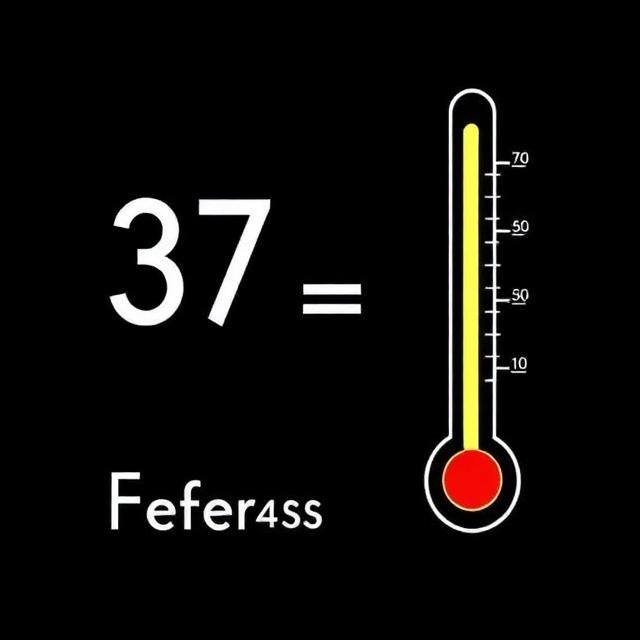
Table of Contents
ToggleWhether you are checking your body temperature, following a cooking recipe, reading a weather report, or completing a science assignment, knowing how to convert temperatures between Celsius and Fahrenheit is extremely useful. One of the most commonly searched temperature conversions is 37 Celsius to Fahrenheit because 37°C represents the average normal human body temperature. People around the world use different temperature scales, making conversions necessary for travel, education, healthcare, and daily life.
In this comprehensive guide, you’ll learn exactly how to convert 37°C to Fahrenheit, understand the conversion formula, discover why 37°C is important, view a helpful temperature chart, and explore practical real-world examples.
37 Celsius to Fahrenheit Answer
The exact conversion is:
37°C = 98.6°F
This temperature is widely recognized as the average normal body temperature for healthy adults.
Celsius to Fahrenheit Formula
The standard formula is:
°F = (°C × 9/5) + 32
Let’s calculate 37°C.
Step 1:
37 × 9 = 333
Step 2:
333 ÷ 5 = 66.6
Step 3:
66.6 + 32 = 98.6°F
Final Answer:
37°C = 98.6°F
Why Is 37°C Important?
Among all temperature conversions, 37 Celsius to Fahrenheit is one of the most searched because it represents the traditionally accepted normal human body temperature. Doctors, nurses, healthcare professionals, and medical students frequently work with both Celsius and Fahrenheit depending on the country they practice in.
Although recent medical research suggests that normal body temperature can vary slightly from person to person, 98.6°F (37°C) remains the most recognized reference point for normal body temperature worldwide.
Understanding Celsius and Fahrenheit
The Celsius scale is used by most countries worldwide and is based on the freezing and boiling points of water. Water freezes at 0°C and boils at 100°C under standard atmospheric pressure.
The Fahrenheit scale is mainly used in the United States and a few other regions. Water freezes at 32°F and boils at 212°F.
Because these scales have different starting points and intervals, mathematical conversion is necessary.
Common Uses of 37°C
There are many situations where converting 37°C to Fahrenheit is helpful.
Medical Thermometers
Many countries sell thermometers that display temperatures in Celsius, while others use Fahrenheit. Understanding that 37°C equals 98.6°F helps people interpret temperature readings accurately.
Healthcare
Doctors often compare patient temperatures using both scales, especially when reviewing international medical records.
Science Education
Students regularly solve temperature conversion problems in mathematics and science classes.
Travel
Travelers visiting countries that use different measurement systems often need quick temperature conversions.
Temperature Conversion Table
| Celsius | Fahrenheit |
|---|---|
| 35°C | 95°F |
| 36°C | 96.8°F |
| 37°C | 98.6°F |
| 38°C | 100.4°F |
| 39°C | 102.2°F |
| 40°C | 104°F |
Examples of Celsius to Fahrenheit Conversion
Example 1
30°C
(30 × 9/5) + 32
= 86°F
Example 2
37°C
(37 × 9/5) + 32
= 98.6°F
Example 3
40°C
(40 × 9/5) + 32
= 104°F
Why Different Countries Use Different Temperature Scales
Most countries have adopted the Celsius system because it is part of the metric system and is simpler for scientific calculations. The United States continues to use Fahrenheit in weather forecasts, household thermometers, and many everyday applications. As a result, temperature conversion remains essential for international communication, travel, healthcare, and education.
Benefits of Learning Temperature Conversion
Knowing how to convert Celsius to Fahrenheit saves time and improves understanding across many situations. Whether you’re interpreting a weather forecast, monitoring a fever, cooking with international recipes, or studying science, temperature conversion is a valuable everyday skill. Instead of relying on online tools every time, understanding the simple conversion formula allows you to calculate temperatures quickly and confidently.
Tips for Remembering the Formula
A simple way to remember the Celsius-to-Fahrenheit formula is:
Multiply by 9, divide by 5, then add 32.
You can also remember:
Double the Celsius temperature, add 30, and you’ll get a rough estimate in Fahrenheit.
For example:
37 × 2 = 74
74 + 30 = 104
This estimate is not exact but can be useful for quick mental calculations.
Frequently Asked Questions (FAQ)
What is 37 Celsius in Fahrenheit?
37°C equals 98.6°F.
Is 37°C considered normal body temperature?
Yes. 37°C (98.6°F) has traditionally been considered the average normal body temperature for a healthy adult, although normal readings can vary slightly between individuals.
What is the formula to convert Celsius to Fahrenheit?
The formula is:
°F = (°C × 9/5) + 32
Why does the United States use Fahrenheit?
The United States continues to use Fahrenheit primarily because it has been the traditional temperature scale for weather reports, household use, and many industries.
Which countries use Celsius?
Most countries around the world use the Celsius temperature scale, including Canada, the United Kingdom (for most scientific and official purposes), Australia, India, Pakistan, and nearly all of Europe.
Is 98.6°F always a normal body temperature?
Not necessarily. While 98.6°F (37°C) is a commonly accepted average, healthy body temperature can range slightly depending on age, time of day, activity level, and the method of measurement.
Can I convert Celsius to Fahrenheit without a calculator?
Yes. You can use the formula:
°F = (°C × 9/5) + 32
Or use the quick estimation method:
Double the Celsius temperature and add 30, keeping in mind that it provides only an approximate value.
Conclusion
Converting 37 Celsius to Fahrenheit is simple once you understand the formula. By multiplying the Celsius temperature by 9/5 and adding 32, you find that 37°C equals 98.6°F, the traditionally accepted average normal human body temperature. Whether you’re checking a thermometer, studying science, traveling internationally, or interpreting weather data, knowing how to convert between Celsius and Fahrenheit is a practical skill that you’ll use repeatedly. Keeping the conversion formula in mind—or bookmarking a reliable conversion guide—can save time and help you interpret temperatures accurately in everyday life.

New Toyota Trucks 2026: Tacoma, Tundra, Hybrid Options and Everything You Need to Know
How to Change Battery in Ford Key Fob: A Complete Step-by-Step Guide

Do the Roar: Meaning, Origin, Meme, and Why the Phrase Became Popular

Мистер Икс 2015: Полный обзор сюжета, актеров и интересных фактов

Profile Cute Images: 100+ Best HD Cute Profile Pictures for WhatsApp, Instagram, Facebook & TikTok

Whispering Gallery in Grand Central Terminal: The Hidden Acoustic Wonder Every Visitor Should Experience
Trending
 Entertainment3 months ago
Мистер Икс 2015: Полный обзор сюжета, актеров и интересных фактов
- Entertainment4 months ago
Profile Cute Images: 100+ Best HD Cute Profile Pictures for WhatsApp, Instagram, Facebook & TikTok
- nature4 months ago
Whispering Gallery in Grand Central Terminal: The Hidden Acoustic Wonder Every Visitor Should Experience
- Tech4 months ago
Billy SpotFund Login: Complete Guide to Secure Access, Account Recovery, and Troubleshooting
- information3 months ago
Kirsten Barlow Biography: Who Is Joe Lando’s Wife, Family, Marriage, and Private Life?
- NEWS4 months ago
Billy Wayne Smith: Biography, Early Life, Marriage, Family, Career, and Life Story
- Business3 months ago
RobTheCoins Business: Complete Guide to Crypto Trading and Investment
- Business4 months ago
Aldo Jankulla Massachusetts LinkedIn: Professional Profile, Career, and Experience