Connect with us

study

Answer Key: Meaning, Purpose, Types, and How to Use It Effectively

Published

on

answer key

An answer key is one of the most useful tools in education because it provides the correct answers to questions included in worksheets, assignments, quizzes, tests, examinations, practice papers, and learning activities. Students often use an answer key to check their work, identify mistakes, understand difficult concepts, and measure their progress. Teachers use answer keys to grade assessments more efficiently, maintain consistency, save time, and ensure that students are evaluated according to the same standards. Although an answer key may appear to be a simple list of correct responses, a well-designed answer key can play an important role in improving learning, supporting fair assessment, and providing meaningful feedback.

The value of an answer key depends greatly on how it is used. When students check their answers carefully and study the reasons behind their mistakes, the answer key becomes a learning resource rather than only a scoring tool. However, when learners copy answers without attempting the questions themselves, they may miss important opportunities to develop critical thinking and problem-solving skills. This complete guide explains the meaning, purpose, types, benefits, limitations, and best practices associated with answer keys. It also discusses how students and teachers can use answer keys in a productive and responsible way.

What Is an Answer Key?

An answer key is an official guide that contains the correct answers or expected responses for a set of questions. It is commonly prepared for educational materials such as homework assignments, worksheets, multiple-choice tests, practice examinations, textbooks, online quizzes, and classroom activities. Depending on the subject and type of assessment, an answer key may contain simple answers, detailed explanations, mathematical solutions, sample responses, grading instructions, or scoring criteria.

For example, a mathematics answer key may show the correct numerical answer and the complete steps used to solve the problem. A science answer key may include the correct response along with a short explanation of the scientific principle involved. In language learning, the answer key may provide correct grammar, vocabulary, spelling, or sentence structure. For essay questions, the answer key may not contain one exact answer because different students can provide different valid responses. Instead, it may include important points, expected ideas, examples, or a scoring rubric that helps teachers evaluate the quality of each response.

An answer key is therefore more than a collection of answers. It is a reference document designed to support accurate checking, consistent grading, and effective learning. The quality of the answer key can influence the quality of feedback that students receive and the reliability of the assessment process.

Why Is an Answer Key Important?

The importance of an answer key comes from its ability to provide a clear standard for evaluating responses. In a classroom, students may complete the same worksheet or examination, but their answers must be checked according to consistent expectations. An answer key helps teachers compare student responses with the intended solutions and reduce unnecessary differences in grading. This can make the assessment process more organized, efficient, and fair.

For students, an answer key provides an opportunity for self-assessment. After completing an exercise, students can compare their responses with the correct answers and determine which topics they understand well. They can also identify areas that require more practice. This process encourages independent learning because students do not always need to wait for a teacher to explain every mistake. When used properly, an answer key can help learners take responsibility for their academic progress.

Answer keys are also useful in large educational settings where teachers may need to check hundreds of papers. A clear and accurate key can reduce grading time and help teachers focus more attention on providing detailed feedback. In digital education, answer keys may be connected to automated assessment systems that provide immediate results. This allows students to receive feedback quickly and continue learning without long delays.

Benefits of Using an Answer Key for Students

Students can gain several educational benefits from using an answer key correctly. One of the greatest advantages is immediate feedback. Instead of waiting for a teacher to check an assignment, students can review their work and identify incorrect responses. Immediate feedback can make learning more effective because the student can connect the mistake with the original question while the topic is still fresh.

An answer key also supports independent learning. Students can complete practice exercises, check their responses, and review weak areas without depending entirely on a teacher. This is especially helpful when preparing for examinations because learners can practice repeatedly and measure improvement over time. A student who keeps making mistakes in one topic can use the answer key to recognize the problem and return to the relevant lesson.

Another benefit is improved confidence. When students compare their work with an accurate answer key and discover that they understand the material, they may feel more prepared for future assessments. At the same time, incorrect answers can show learners where additional effort is needed. The goal is not simply to achieve a high score but to understand the reasons behind both correct and incorrect responses.

Benefits of an Answer Key for Teachers

Teachers use answer keys to make grading more accurate, consistent, and efficient. Without a clear answer key, a teacher may need to reconsider the expected response for each question while checking many papers. This can increase grading time and create the possibility of inconsistent evaluation. A well-prepared answer key provides a reliable reference and helps ensure that similar responses receive similar scores.

Answer keys also support collaboration among teachers. When several instructors teach the same subject or grade the same examination, a shared answer key can help them apply the same standards. This is particularly important in standardized assessments and large educational institutions. A detailed key can also clarify how partial marks should be awarded when students show correct reasoning but make minor errors.

Teachers can use information from answer-key-based assessments to improve instruction. If many students choose the same incorrect response, the teacher may discover that a topic was misunderstood or that the lesson requires a different explanation. In this way, answer keys can support not only grading but also curriculum planning and teaching improvement.

How Students Should Use an Answer Key Effectively

Students should first attempt all questions without looking at the answer key. This allows them to test their current understanding and develop independent thinking. Looking at the answers before making an honest attempt may create the illusion of learning because recognizing a correct answer is often easier than producing it independently.

After completing the exercise, students should compare each response with the answer key. They should not only mark answers as right or wrong. They should ask questions such as: Why is my answer incorrect? Which concept did I misunderstand? Did I read the question carefully? Did I make a calculation error? Is there a better method for solving the problem? These questions turn the answer-checking process into a deeper learning activity.

Students should also keep a record of repeated mistakes. For example, a learner may notice frequent errors in fractions, grammar rules, scientific vocabulary, or reading comprehension. By organizing mistakes by topic, students can create a focused study plan. This approach is more useful than repeatedly completing random exercises without understanding the underlying problems.

Common Mistakes When Using an Answer Key

One common mistake is copying the answer without understanding it. This may help a student complete an assignment quickly, but it does not necessarily improve knowledge. The student may later struggle when asked to solve a similar problem without access to the answer key.

Another mistake is focusing only on the final score. A score can provide a general measure of performance, but it does not explain the reason for each error. Students should examine patterns in their mistakes and identify the concepts that need further study. A learner who receives 80 percent may still have important weaknesses, while a learner who receives 60 percent may understand many difficult concepts but need help with a specific topic.

Some students also assume that every answer key is perfect. In reality, answer keys can contain mistakes, unclear wording, outdated information, or incomplete explanations. If an answer appears incorrect, students should review reliable learning materials and discuss the issue with a teacher. An answer key should be treated as an important reference, but critical thinking should still be used.

How Teachers Can Create a High-Quality Answer Key

A good answer key should be accurate, clear, complete, and easy to use. Teachers should review every question and verify that the expected answer is correct. If a question allows more than one valid response, the answer key should include acceptable alternatives. This prevents students from losing marks simply because they used different but correct wording.

The key should also explain how marks are awarded. For questions involving multiple steps, teachers may specify the points assigned to each stage. For example, a mathematics problem may award marks for selecting the correct formula, substituting values correctly, performing calculations, and writing the final answer. This approach supports fair grading and recognizes partial understanding.

Teachers should test the answer key before using it in a major assessment. Another teacher or subject expert may review the questions and solutions to identify errors or unclear instructions. This process can improve reliability and reduce problems during grading.

Answer Key Examples

Consider the following simple mathematics question:

Question: What is 15 + 27?

A basic answer key may state:

Answer: 42

A detailed answer key may provide:

15 + 27 = 42. Add the ones: 5 + 7 = 12. Write 2 and carry 1. Add the tens: 1 + 2 + 1 = 4. Therefore, the answer is 42.

The detailed version is more useful for learning because it explains the process. A student who wrote an incorrect answer can identify whether the mistake occurred during addition or carrying.

For an English question:

Question: Choose the correct word: “She ___ to school every day.”**

The answer key may state:

Answer: goes

It may also explain that “goes” is used because the subject “she” is third-person singular in the simple present tense.

These examples show that explanations can make an answer key more valuable than a simple list of correct responses.

The Role of Answer Keys in Online Education

Online education has increased the use of digital answer keys and automated assessment systems. Students can complete quizzes from different locations and receive immediate results. This can support flexible learning and allow students to study at their own pace. Online answer keys may include explanations, links to additional lessons, and recommendations for further practice.

However, digital answer systems should be designed carefully. Some questions require creativity, reasoning, or detailed explanations that cannot always be evaluated accurately by automated tools. Human review may still be necessary for essays, projects, presentations, and complex problem-solving tasks. The best educational systems often combine automated feedback with teacher guidance.

Are Answer Keys Good or Bad for Learning?

An answer key is neither automatically good nor automatically harmful. Its effect depends on how it is used. When students attempt questions independently, compare their work, study mistakes, and review difficult concepts, the answer key can improve learning. When students copy answers without thinking, the same resource may reduce meaningful practice.

The most effective use of an answer key involves active learning. Students should explain the correct answer in their own words, solve the question again without looking, and practice similar problems. Teachers can encourage this process by providing explanations rather than only final answers.

Conclusion

An answer key is an important educational tool that supports learning, self-assessment, accurate grading, and consistent evaluation. It can help students identify mistakes, understand correct solutions, prepare for examinations, and take greater responsibility for their progress. For teachers, an answer key saves time, supports fair grading, and provides useful information about student understanding.

The greatest value of an answer key comes from thoughtful use. Students should not treat it as a shortcut for copying answers. Instead, they should use it to analyze mistakes, improve weak areas, and develop stronger problem-solving skills. Teachers should create answer keys that are accurate, detailed, and flexible enough to recognize valid alternative responses. When designed and used effectively, an answer key becomes more than a list of correct answers—it becomes a valuable guide for better learning and educational success.

Frequently Asked Questions

1. What is an answer key?

An answer key is a guide that provides the correct answers or expected responses for questions in a worksheet, quiz, test, examination, textbook, or learning activity. It may also include explanations, solutions, scoring instructions, or grading criteria.

2. Why is an answer key important?

An answer key is important because it helps students check their work and understand mistakes. It also helps teachers grade assessments consistently, save time, and maintain clear evaluation standards.

3. How should students use an answer key?

Students should first attempt the questions independently. After completing the work, they should compare their answers with the key, study incorrect responses, understand the reasons for mistakes, and practice similar questions.

4. Can an answer key contain more than one correct answer?

Yes. Some questions allow multiple correct responses. A well-designed answer key should include acceptable alternatives, especially for short-answer, discussion, and open-ended questions.

5. Is it wrong to use an answer key?

Using an answer key is not wrong when it is used for learning, practice, and self-assessment. It becomes unhelpful when a student copies answers without attempting to understand or solve the questions.

6. What is the difference between an answer key and a marking scheme?

An answer key usually provides correct answers, while a marking scheme explains how marks should be awarded. A marking scheme may include point values, partial-credit rules, and detailed evaluation criteria.

7. How can teachers make an answer key more effective?

Teachers can make an answer key more effective by checking its accuracy, including clear explanations, identifying acceptable alternative answers, providing partial-mark rules, and using rubrics for complex assignments.

8. Can an answer key improve exam preparation?

Yes. Students can use answer keys to check practice tests, identify weak topics, review mistakes, and measure progress. The key is to understand the solutions rather than memorize or copy them.

9. Are online answer keys reliable?

Online answer keys can be useful, but their accuracy depends on the source. Students should use trusted educational websites, official materials, textbooks, or teacher-provided resources and should verify answers that appear unclear or incorrect.

10. What should a good answer key include?

A good answer key should include accurate answers, clear explanations when necessary, acceptable alternative responses, detailed solutions for complex questions, and consistent scoring guidance.

Continue Reading

study

Which of the Following Is an Arithmetic Sequence? (Brainly Guide): Complete Explanation with Examples
Published

on

which of the following is an arithmetic sequence brainly

Mathematics is full of patterns, and one of the most common patterns students encounter is the arithmetic sequence. If you searched Which of the following is an arithmetic sequence Brainly, you are probably trying to solve a homework question or prepare for an exam. Understanding arithmetic sequences is easier than it seems once you know the simple rule that defines them. Instead of memorizing answers, learning the concept will help you solve nearly every arithmetic sequence question you encounter in school.

Arithmetic sequences appear in middle school, high school, college entrance exams, and standardized tests because they teach students how numbers change in a predictable way. These sequences also have practical applications in finance, engineering, computer science, and everyday problem-solving. Learning how to recognize an arithmetic sequence is therefore a valuable mathematical skill that extends beyond the classroom.

What Is an Arithmetic Sequence?

An arithmetic sequence is a sequence of numbers where the difference between consecutive terms remains constant. This constant difference is known as the common difference (d).

For example:

  • 2, 5, 8, 11, 14
  • 10, 15, 20, 25
  • 50, 45, 40, 35

Each sequence changes by exactly the same amount every time.

How to Identify an Arithmetic Sequence

Follow these simple steps:

Step 1: Find the Difference

Subtract each term from the next term.

Example:

5, 8, 11, 14

  • 8 − 5 = 3
  • 11 − 8 = 3
  • 14 − 11 = 3

Since every difference equals 3, this is an arithmetic sequence.

Example 2

4, 9, 14, 19

Differences:

  • 9 − 4 = 5
  • 14 − 9 = 5
  • 19 − 14 = 5

Again, every difference is the same.

Therefore, this is an arithmetic sequence.

Example 3

2, 4, 8, 16

Differences:

  • 2
  • 4
  • 8

The differences are not equal.

Therefore, this is NOT an arithmetic sequence.

Characteristics of Arithmetic Sequences

An arithmetic sequence always has:

  • A constant difference
  • Predictable pattern
  • Linear growth or decrease
  • Equal spacing between numbers

If the difference changes, the sequence is not arithmetic.

Formula for the nth Term

The nth term formula is:

an=a1+(n−1)da_n = a_1 + (n-1)d

Where:

  • a₁ = first term
  • d = common difference
  • n = term number

Example:

Sequence:

3, 7, 11, 15…

Find the 10th term.

  • First term = 3
  • Difference = 4

Calculation:

10th term

= 3 + (10−1)×4

= 3 + 36

= 39

Real-Life Examples

Arithmetic sequences appear in many everyday situations.

A person saves $20 every week.

Savings:

  • Week 1 = $20
  • Week 2 = $40
  • Week 3 = $60
  • Week 4 = $80

This forms an arithmetic sequence because the increase is always $20.

Another example is climbing stairs where each floor contains the same number of steps.

Common Mistakes Students Make

Many students confuse arithmetic sequences with geometric sequences.

Arithmetic:

5, 10, 15, 20

Difference = 5

Geometric:

5, 10, 20, 40

Ratio = 2

Always check whether you are adding or subtracting the same number rather than multiplying or dividing.

Practice Questions

Question 1

Which sequence is arithmetic?

A.

2, 4, 6, 8

B.

3, 6, 12, 24

C.

5, 9, 16, 25

Answer:

A because every term increases by 2.

Question 2

Find the common difference.

Sequence:

11, 16, 21, 26

Answer:

5

Question 3

Find the next number.

100, 90, 80, 70

Answer:

60

Question 4

Is this arithmetic?

7, 10, 13, 16, 19

Answer:

Yes.

Common difference = 3.

Why Students Search This on Brainly

Many students search “Which of the following is an arithmetic sequence Brainly” because homework assignments often provide several number sequences and ask students to choose the arithmetic one. Instead of relying only on a posted answer, understanding the rule of equal differences allows you to solve similar questions independently and with confidence.

Conclusion

Arithmetic sequences are among the simplest and most important mathematical patterns. The key to identifyingwhich of the following is an arithmetic sequence brainly one is checking whether the difference between consecutive numbers remains constant throughout the sequence. Once you understand the concept of the common difference and know how to apply the nth-term formula, solving arithmetic sequence problems becomes straightforward. Whether you are preparing for a classroom test, completing homework, or searching for a Brainly-style explanation, mastering arithmetic sequences will strengthen your overall mathematical reasoning and make future sequence problems much easier to solve.

Frequently Asked Questions (FAQ)

What is an arithmetic sequence?

An arithmetic sequence is a sequence of numbers where the difference between consecutive terms is always the same.

How do I know if a sequence is arithmetic?

Subtract each term from the next. If every difference is equal, the sequence is arithmetic.

What is the common difference?

The common difference is the constant amount added or subtracted between consecutive terms.

What is the arithmetic sequence formula?

The nth-term formula is:

an=a1+(n−1)da_n = a_1 + (n-1)d

where a1a_1 is the first term and dd is the common difference.

What is the difference between arithmetic and geometric sequences?

An arithmetic sequence changes by adding or subtracting the same number each time, while a geometric sequence changes by multiplying or dividing by the same number each time.

Why is this topic popular on Brainly?

Students frequently search for “which of the following is an arithmetic sequence brainly” to get help with homework, quizzes, and exam preparation, making it a common educational search query.

Continue Reading

study

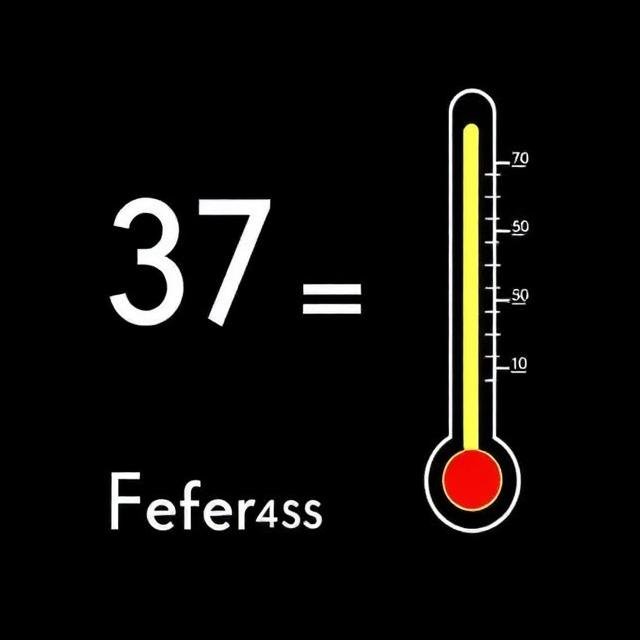
37 Celsius to Fahrenheit: Easy Conversion Formula, Chart, and Practical Examples

Published

on

37 celsius to fahrenheit

Whether you are checking your body temperature, following a cooking recipe, reading a weather report, or completing a science assignment, knowing how to convert temperatures between Celsius and Fahrenheit is extremely useful. One of the most commonly searched temperature conversions is 37 Celsius to Fahrenheit because 37°C represents the average normal human body temperature. People around the world use different temperature scales, making conversions necessary for travel, education, healthcare, and daily life.

In this comprehensive guide, you’ll learn exactly how to convert 37°C to Fahrenheit, understand the conversion formula, discover why 37°C is important, view a helpful temperature chart, and explore practical real-world examples.

37 Celsius to Fahrenheit Answer

The exact conversion is:

37°C = 98.6°F

This temperature is widely recognized as the average normal body temperature for healthy adults.

Celsius to Fahrenheit Formula

The standard formula is:

°F = (°C × 9/5) + 32

Let’s calculate 37°C.

Step 1:

37 × 9 = 333

Step 2:

333 ÷ 5 = 66.6

Step 3:

66.6 + 32 = 98.6°F

Final Answer:

37°C = 98.6°F

Why Is 37°C Important?

Among all temperature conversions, 37 Celsius to Fahrenheit is one of the most searched because it represents the traditionally accepted normal human body temperature. Doctors, nurses, healthcare professionals, and medical students frequently work with both Celsius and Fahrenheit depending on the country they practice in.

Although recent medical research suggests that normal body temperature can vary slightly from person to person, 98.6°F (37°C) remains the most recognized reference point for normal body temperature worldwide.

Understanding Celsius and Fahrenheit

The Celsius scale is used by most countries worldwide and is based on the freezing and boiling points of water. Water freezes at 0°C and boils at 100°C under standard atmospheric pressure.

The Fahrenheit scale is mainly used in the United States and a few other regions. Water freezes at 32°F and boils at 212°F.

Because these scales have different starting points and intervals, mathematical conversion is necessary.

Common Uses of 37°C

There are many situations where converting 37°C to Fahrenheit is helpful.

Medical Thermometers

Many countries sell thermometers that display temperatures in Celsius, while others use Fahrenheit. Understanding that 37°C equals 98.6°F helps people interpret temperature readings accurately.

Healthcare

Doctors often compare patient temperatures using both scales, especially when reviewing international medical records.

Science Education

Students regularly solve temperature conversion problems in mathematics and science classes.

Travel

Travelers visiting countries that use different measurement systems often need quick temperature conversions.

Temperature Conversion Table

CelsiusFahrenheit
35°C95°F
36°C96.8°F
37°C98.6°F
38°C100.4°F
39°C102.2°F
40°C104°F

Examples of Celsius to Fahrenheit Conversion

Example 1

30°C

(30 × 9/5) + 32

= 86°F

Example 2

37°C

(37 × 9/5) + 32

= 98.6°F

Example 3

40°C

(40 × 9/5) + 32

= 104°F

Why Different Countries Use Different Temperature Scales

Most countries have adopted the Celsius system because it is part of the metric system and is simpler for scientific calculations. The United States continues to use Fahrenheit in weather forecasts, household thermometers, and many everyday applications. As a result, temperature conversion remains essential for international communication, travel, healthcare, and education.

Benefits of Learning Temperature Conversion

Knowing how to convert Celsius to Fahrenheit saves time and improves understanding across many situations. Whether you’re interpreting a weather forecast, monitoring a fever, cooking with international recipes, or studying science, temperature conversion is a valuable everyday skill. Instead of relying on online tools every time, understanding the simple conversion formula allows you to calculate temperatures quickly and confidently.

Tips for Remembering the Formula

A simple way to remember the Celsius-to-Fahrenheit formula is:

Multiply by 9, divide by 5, then add 32.

You can also remember:

Double the Celsius temperature, add 30, and you’ll get a rough estimate in Fahrenheit.

For example:

37 × 2 = 74

74 + 30 = 104

This estimate is not exact but can be useful for quick mental calculations.

Frequently Asked Questions (FAQ)

What is 37 Celsius in Fahrenheit?

37°C equals 98.6°F.

Is 37°C considered normal body temperature?

Yes. 37°C (98.6°F) has traditionally been considered the average normal body temperature for a healthy adult, although normal readings can vary slightly between individuals.

What is the formula to convert Celsius to Fahrenheit?

The formula is:

°F = (°C × 9/5) + 32

Why does the United States use Fahrenheit?

The United States continues to use Fahrenheit primarily because it has been the traditional temperature scale for weather reports, household use, and many industries.

Which countries use Celsius?

Most countries around the world use the Celsius temperature scale, including Canada, the United Kingdom (for most scientific and official purposes), Australia, India, Pakistan, and nearly all of Europe.

Is 98.6°F always a normal body temperature?

Not necessarily. While 98.6°F (37°C) is a commonly accepted average, healthy body temperature can range slightly depending on age, time of day, activity level, and the method of measurement.

Can I convert Celsius to Fahrenheit without a calculator?

Yes. You can use the formula:

°F = (°C × 9/5) + 32

Or use the quick estimation method:

Double the Celsius temperature and add 30, keeping in mind that it provides only an approximate value.

Conclusion

Converting 37 Celsius to Fahrenheit is simple once you understand the formula. By multiplying the Celsius temperature by 9/5 and adding 32, you find that 37°C equals 98.6°F, the traditionally accepted average normal human body temperature. Whether you’re checking a thermometer, studying science, traveling internationally, or interpreting weather data, knowing how to convert between Celsius and Fahrenheit is a practical skill that you’ll use repeatedly. Keeping the conversion formula in mind—or bookmarking a reliable conversion guide—can save time and help you interpret temperatures accurately in everyday life.

Continue Reading

study

15 cm to Inches: Complete Conversion Guide

Published

on

15 cm to inches

Converting measurements between centimeters and inches is one of the most common tasks for students, engineers, DIY enthusiasts, online shoppers, and professionals working with international measurement systems. If you’ve searched for 15 cm to inches, you’re likely trying to determine the equivalent measurement using the imperial system. Fortunately, converting centimeters to inches is straightforward once you understand the conversion formula.

Whether you’re measuring furniture, clothing dimensions, artwork, electronic devices, or construction materials, knowing how to convert 15 centimeters to inches can help you make accurate purchasing decisions and avoid measurement mistakes. This comprehensive guide explains everything you need to know, including the conversion formula, worked examples, comparison charts, real-life applications, and answers to frequently asked questions.

15 cm to Inches Conversion

The exact conversion formula is:

1 centimeter = 0.3937007874 inches

To convert centimeters into inches:

Inches = Centimeters × 0.3937007874

For 15 centimeters:

15 × 0.3937007874 = 5.905511811 inches

Final Answer

15 cm = 5.91 inches (rounded to two decimal places)

or

15 cm = 5.9055 inches (exact value)

Quick Conversion Table

CentimetersInches
10 cm3.94 inches
11 cm4.33 inches
12 cm4.72 inches
13 cm5.12 inches
14 cm5.51 inches
15 cm5.91 inches
16 cm6.30 inches
17 cm6.69 inches
18 cm7.09 inches
19 cm7.48 inches
20 cm7.87 inches

Understanding Centimeters and Inches

Centimeters belong to the metric system, which is used by most countries worldwide. The metric system is known for its simplicity because it is based on powers of ten, making calculations straightforward and consistent across scientific, educational, and everyday applications.

Inches are part of the imperial measurement system, commonly used in the United States and a few other regions. They are frequently used for measuring screen sizes, furniture dimensions, construction materials, clothing, and various household items. Because products are often manufactured and sold internationally, converting between centimeters and inches has become an essential skill for consumers and professionals alike.

Step-by-Step Conversion Process

Converting 15 centimeters into inches requires only three simple steps:

Step 1: Write the measurement in centimeters.

15 cm

Step 2: Multiply by the conversion factor.

15 × 0.3937007874

Step 3: Calculate the result.

5.905511811 inches

Rounded:

15 cm = 5.91 inches

This method works for any centimeter measurement.

Why Convert 15 cm to Inches?

People search for this conversion for many practical reasons. Online shopping websites often list product dimensions in centimeters while customers in countries using the imperial system prefer inches. Furniture buyers compare dimensions before purchasing, ensuring that tables, shelves, or decorations fit available spaces. Students regularly convert units while solving mathematics and science problems, and professionals in engineering, architecture, and manufacturing frequently switch between metric and imperial measurements to comply with international standards. Hobbyists, DIY enthusiasts, and crafters also rely on accurate conversions when following instructions from books, videos, or online tutorials that use different measurement systems.

Everyday Examples of 15 cm

Understanding the size of 15 centimeters becomes easier when compared with familiar objects. A 15 cm ruler is approximately 5.91 inches long. Many smartphones have dimensions close to this length, depending on the model. Kitchen utensils, small notebooks, decorative items, and craft supplies are often around 15 cm in size. Visualizing these common objects helps you estimate measurements without needing a ruler every time.

Common Centimeter to Inch Conversions

CentimetersInches
1 cm0.39 inches
2 cm0.79 inches
3 cm1.18 inches
5 cm1.97 inches
8 cm3.15 inches
10 cm3.94 inches
15 cm5.91 inches
25 cm9.84 inches
30 cm11.81 inches
50 cm19.69 inches
100 cm39.37 inches

Tips for Accurate Measurement Conversion

When converting measurements, always use the precise conversion factor whenever accuracy is important, particularly in engineering, construction, manufacturing, or scientific work. For everyday tasks such as shopping or home projects, rounding to two decimal places is generally sufficient. If you frequently work with both metric and imperial units, consider keeping a conversion chart or using a reliable calculator for quick reference. Double-check your calculations whenever measurements affect purchasing decisions or technical projects where precision is essential.

Formula Summary

Centimeters to Inches

Inches = Centimeters × 0.3937007874

Inches to Centimeters

Centimeters = Inches × 2.54

These two formulas cover nearly every conversion you’ll need between the metric and imperial systems.

Conclusion

Converting 15 cm to inches is quick and easy once you know the correct formula. Since one centimeter equals 0.3937007874 inches, multiplying 15 by this value gives 5.9055 inches, which rounds to 5.91 inches. This conversion is useful in everyday situations such as shopping online, measuring household items, completing school assignments, or working on professional projects that involve different measurement systems. By understanding the conversion process and using the provided tables and examples, you can confidently switch between centimeters and inches whenever needed.

Frequently Asked Questions (FAQ)

1. How many inches is 15 cm?

15 cm equals 5.91 inches when rounded to two decimal places. The exact value is 5.9055 inches.

2. What is the formula for converting centimeters to inches?

Multiply the number of centimeters by 0.3937007874.

Inches = Centimeters × 0.3937007874

3. Is 15 cm exactly 6 inches?

No. 15 cm is approximately 5.91 inches, which is slightly less than 6 inches.

4. How do I convert inches back to centimeters?

Multiply the number of inches by 2.54.

Centimeters = Inches × 2.54

5. Why do some countries use centimeters while others use inches?

Most countries use the metric system, which includes centimeters, because it is standardized and easy to calculate with. The United States primarily uses the imperial system, where inches, feet, and yards are more common for everyday measurements.

6. Can I round 15 cm to 6 inches?

For rough estimates, you may round 5.91 inches to 6 inches. However, for precise measurements, use 5.91 inches or the exact value of 5.9055 inches.

7. Is there an easy way to remember the conversion?

Yes. Remember that 1 inch equals 2.54 centimeters, or 1 centimeter equals approximately 0.394 inches. This makes quick mental calculations much easier.

Continue Reading

Trending